Support
Everything you need to know for a smooth and hassle-free shipping experience with Verma Couriers.
Mandatory Documents
Invoice
Please provide invoices for all your shipments. Make sure to print 2–3 copies:
- 1st copy — Place inside the box.
- 2nd copy — Attach outside the box.
- 3rd copy — Hand over to our representative (optional).
E-Way Bills
E-Way bills should be assigned to our GST / Transporter ID:
The e-way bill is an important document required for the movement of goods. It is mandatory if you are moving goods worth more than INR 50,000 from one place to another. Each e-way bill must have detailed information about the goods being transported.
Additionally, you need an E-Way bill to transport goods worth less than INR 50,000 if they are handicraft goods or goods for inter-state job work.
Exceptions — When E-Way Bill is Not Required
- Goods with a value less than INR 50,000 (except mandatory provisions like handicraft goods and goods for inter-state job work).
- Goods transported by a non-motorized conveyance (e.g. horse carts or manual carts).
- Goods transported from port, airport, air cargo complex and land customs station to an ICD or CFS for clearance by customs, or under customs bond/supervision.
- Goods transported within the notified area.
- Goods in transit from/to Nepal or Bhutan.
- Goods transported to/from the Ministry of Defense.
- Goods being transported to a weighbridge within 20 km and back, covered under a delivery challan.
- Goods transported by government or local authorities by rail as a consignor.
- Used personal and household goods.
Banned / Restricted Items
The transportation of dangerous goods is controlled and governed by a variety of different regulatory regimes, operating at both the national and international levels. Prominent frameworks include the UN Recommendations on the Transport of Dangerous Goods, ICAO's Technical Instructions, IATA's Dangerous Goods Regulations and the IMO's International Maritime Dangerous Goods Code. These mandates govern how dangerous goods are handled, packaged, labelled and transported.
The following goods are prohibited for shipping:
Explosives
Flammable Gases / Liquids / Solids
Toxic & Infectious
Radioactive etc.
Volumetric Charges
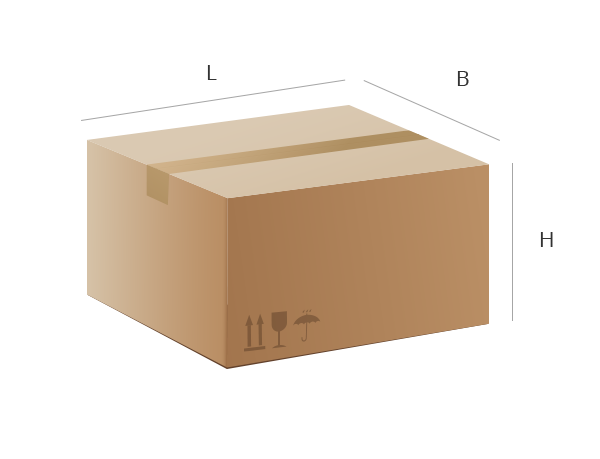
Light-weight consignments occupying a large space due to dimensions need to be charged as per the volumetric weight calculations as follows:
Fraud Awareness
We never request payment or personal information in exchange for goods or services via e-mails or social platforms. If you receive any such communication, please do not reply. Your interaction may result in a financial loss. Please be wary of such fraudulent requests.
Common Warnings of Fraud
- Unexpected requests for money in return for delivery of a package, often accompanied by an unusual sense of urgency.
- Online exchange of a receipt that may look altered, or where the AWB number is not trackable online or seems unusually short or long.
- Links to misspelled web addresses (e.g. vermacouriers.co.in, verma-couriers.com etc.).
- Claims about winning a large sum of money, expensive items, or the lottery.
- Requests to share credit/debit card numbers.
- Fraudulent calls or e-mails that request online payments.